
What to do in the first hour
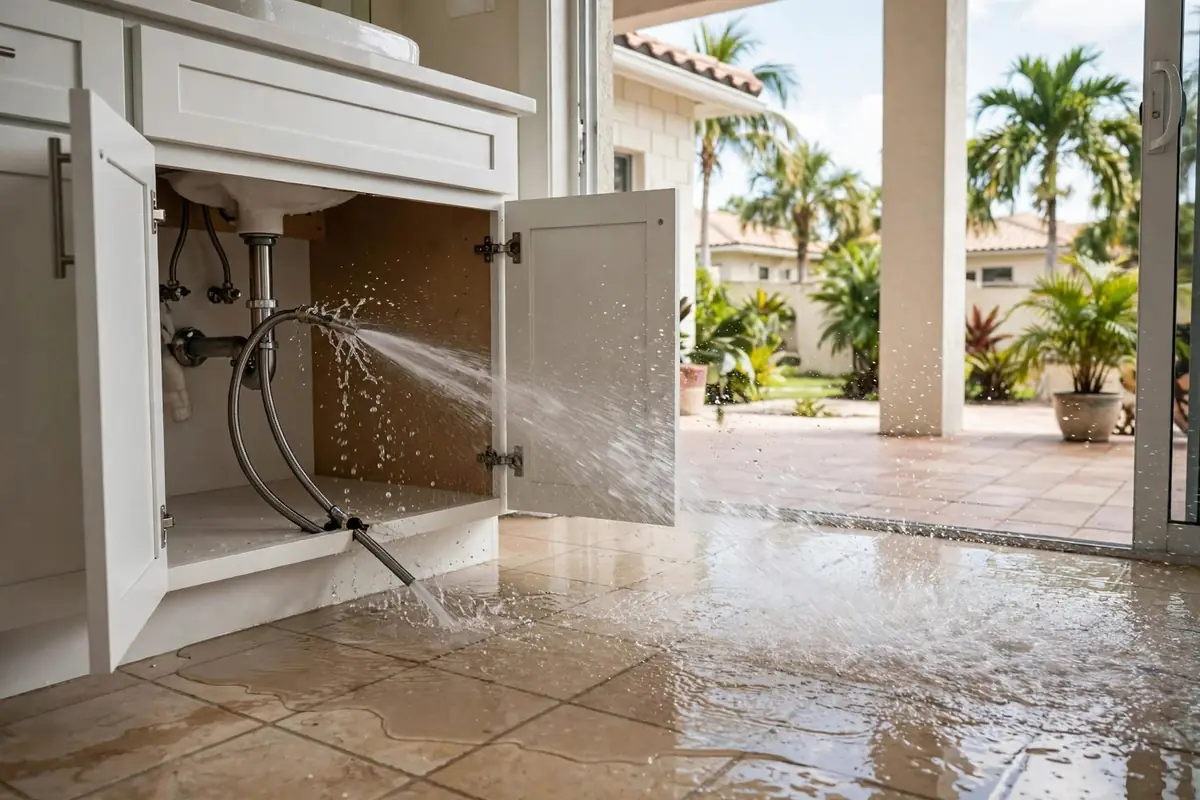
- Stop the source. Close the shutoff under the sink or toilet, or the main valve where the water line enters the house. In many Florida block homes the main shutoff sits near the front hose bib or in the garage.
- Make the area safe. If water touches outlets, power strips or appliances, stay out of it. Switch off the breaker only if you can reach the panel from a dry spot.
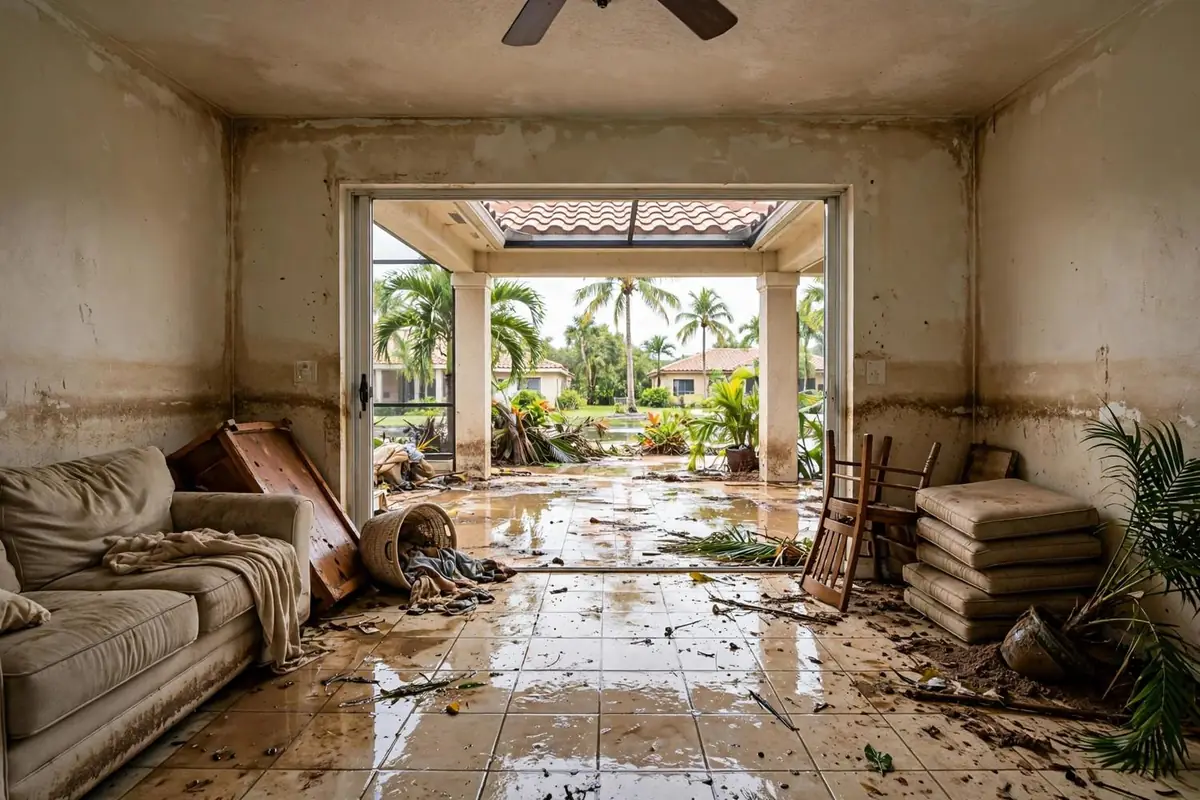
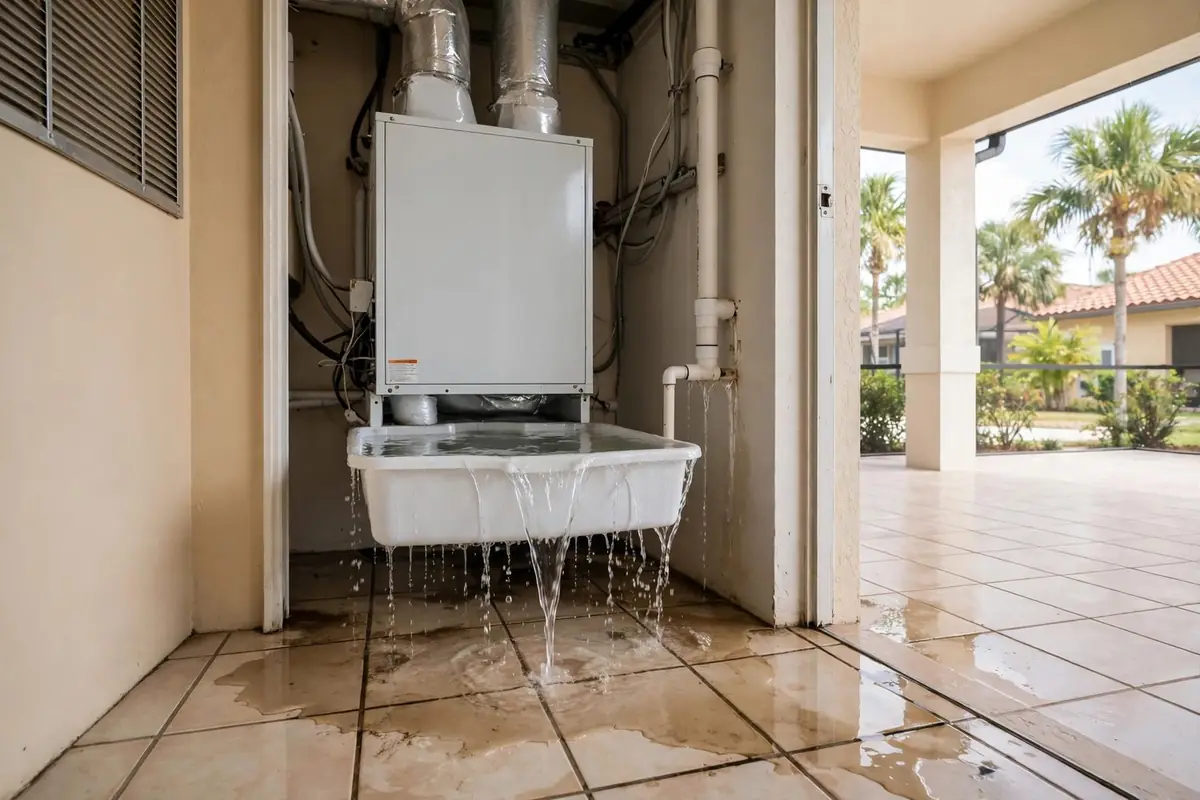
- Document it. Take wide photos and close-ups of the water line on walls, wet flooring and the source (a split supply line, a full AC drain pan). Insurers ask for this.
- Move what you can. Lift furniture onto blocks or foil, and get rugs, papers and electronics out of the wet room.
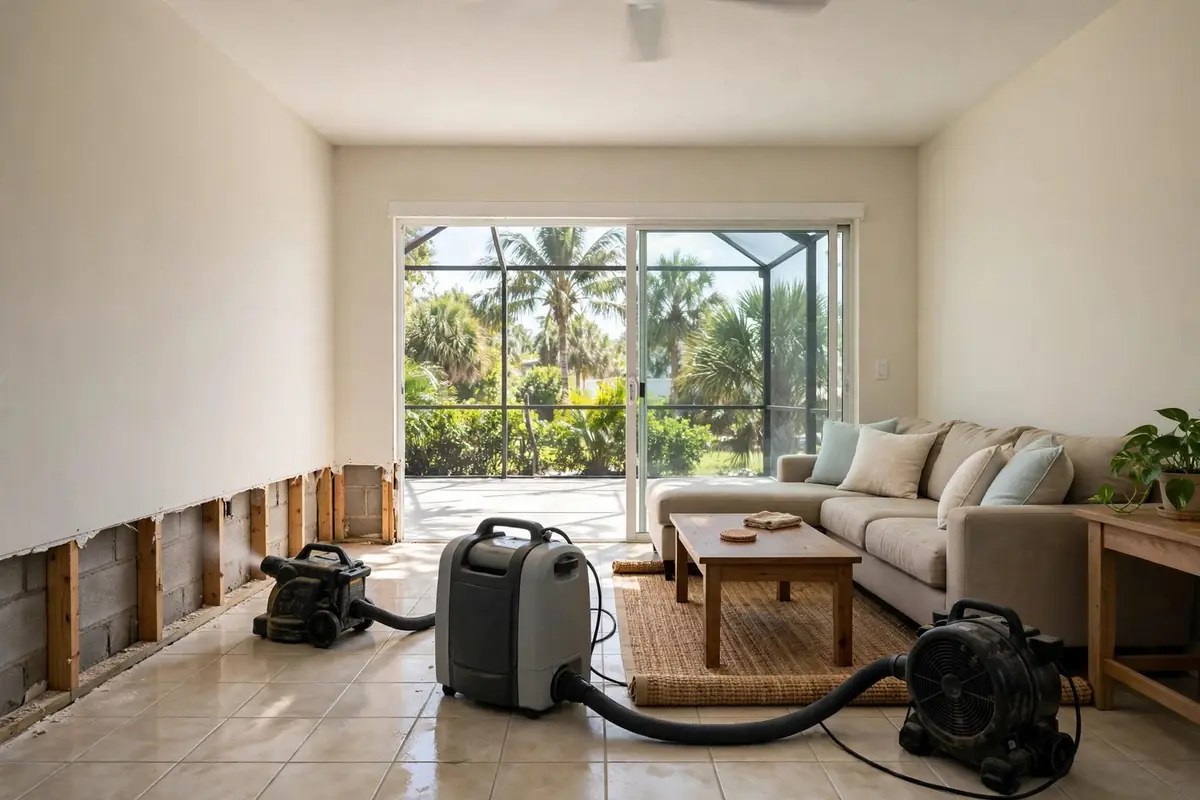
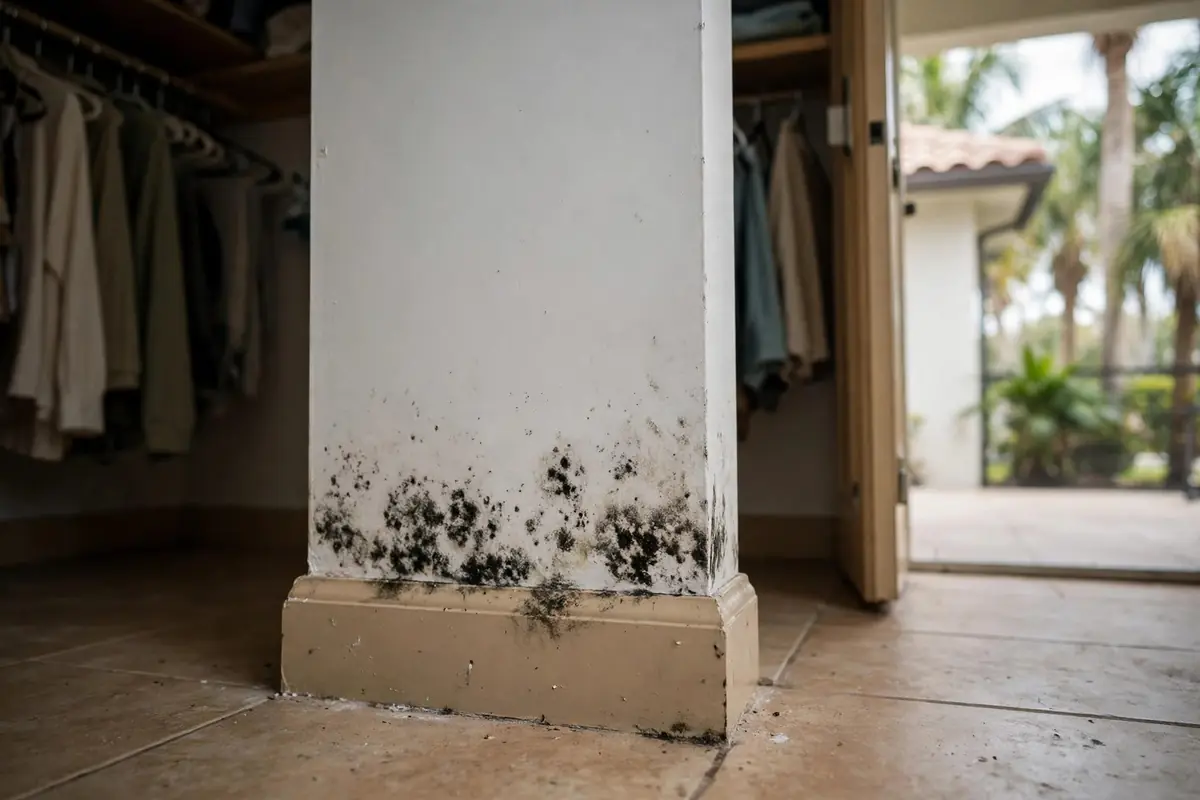
- Call for drying. Water wicks up drywall and under baseboards and tile within hours. Drying equipment and moisture readings are what keep a leak from turning into a mold job.
Why water damage moves fast in south Sarasota County
The Venice area averages a little over 51 inches of rain a year, and about 60% of it falls from June through September (NOAA normals). The same months bring the highest indoor humidity and the hardest-working air conditioners, so AC condensate lines and drain pans overflow more often in summer. The Florida Department of Health lists AC drain pans as a source of indoor flooding and suggests keeping indoor humidity below 60%.
| Month | Average rainfall, Venice (inches) |
|---|---|
| June | 7.81 |
| July | 7.39 |
| August (wettest) | 8.34 |
| September | 7.16 |
| November (driest) | 1.54 |
| Whole year | 51.27 |
NOAA U.S. Climate Normals 1991–2020, station Venice, FL (USC00089176). June through September brings about 60% of the year's rain.
Storms add surge and river flooding on top of that. Hurricane Ian (2022) pushed the Myakka River to record levels and closed part of I-75 in southern Sarasota County. Helene (2024) brought 4 to 6 feet of surge from Venice to south of Englewood, and Milton (2024), which came ashore on Siesta Key, brought 6 to 9 feet from Venice south to Boca Grande (National Hurricane Center reports).
The homes in this area, and why it matters
Housing here ranges from 1960s and 1970s ranch homes on the Venice island to North Port neighborhoods where most homes went up after 2000. Venice, Nokomis and Englewood also have many manufactured homes and condos, and many owners are seasonal, so a leak can run for days before anyone finds it.
Venice
ZIP 34285, 34292, 34293
- Households
- 15,027
- Median year built
- 1986
- Built before 1980
- 41.7%
- Mobile homes
- 11.8%
Water: City of Venice Utilities
North Port
ZIP 34286, 34287, 34288, 34289, 34291
- Households
- 34,419
- Median year built
- 2005
- Built before 1980
- 13.1%
- Mobile homes
- 3.4%
Water: North Port Utilities
Nokomis
ZIP 34275
- Households
- 1,749
- Median year built
- 1978
- Built before 1980
- 56.4%
- Mobile homes
- 40.1%
Water: Sarasota County Public Utilities
Osprey
ZIP 34229
- Households
- 2,893
- Median year built
- 1998
- Built before 1980
- 16.5%
- Mobile homes
- 6.9%
Water: Sarasota County Public Utilities
Englewood
ZIP 34223, 34224
- Households
- 10,598
- Median year built
- 1982
- Built before 1980
- 45.8%
- Mobile homes
- 23.6%
Water: Englewood Water District
Port Charlotte
ZIP 33948, 33952, 33953, 33954, 33981
- Households
- 27,888
- Median year built
- 1983
- Built before 1980
- 40.6%
- Mobile homes
- 0.9%
Water: Charlotte County Utilities
Punta Gorda
ZIP 33950, 33955, 33980, 33982, 33983
- Households
- 10,235
- Median year built
- 1994
- Built before 1980
- 21.2%
- Mobile homes
- 6.2%
Water: City of Punta Gorda Utilities
Rotonda West
ZIP 33947, 33946
- Households
- 5,328
- Median year built
- 1998
- Built before 1980
- 13.2%
- Mobile homes
- 0.8%
Water: Charlotte County Utilities
U.S. Census Bureau, American Community Survey 2020–2024 5-year estimates (place level; Nokomis, Osprey and Englewood are Census-designated places). Small places have wide margins of error.
What a water damage company will typically do
- Find and confirm the source is stopped.
- Map the moisture with meters and thermal imaging, including behind baseboards and under cabinets.
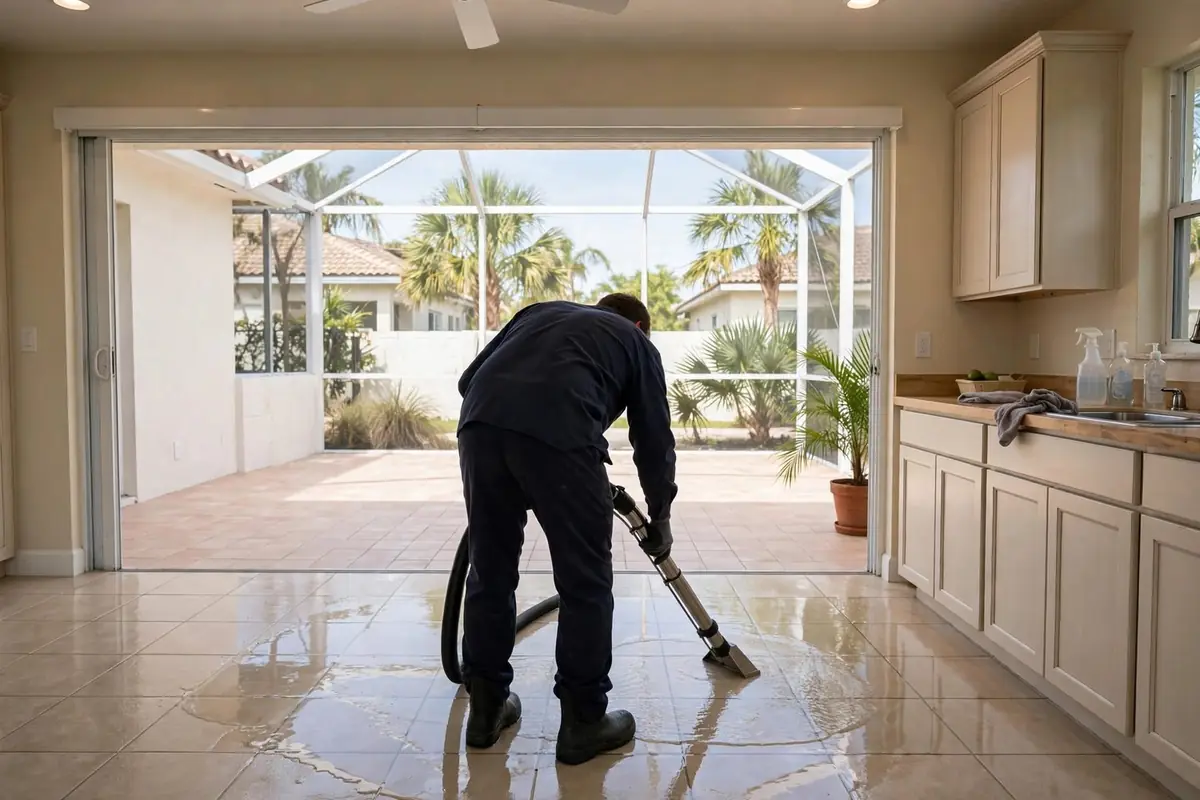
- Extract standing water from tile, carpet and pad.
- Set air movers and dehumidifiers, then measure drying each day.
- Remove materials that can't be dried (soaked pad, swollen cabinet bases, wet insulation, drywall that stayed wet too long).
- Document readings and photos for your insurer.
Ask for the plan and a written price before work starts.
Sources
- NOAA NCEI, U.S. Climate Normals 1991–2020, station Venice, FL (USC00089176)
- Florida Department of Health, Mold and your health
- National Hurricane Center, Tropical Cyclone Report: Hurricane Ian (AL092022)
- National Hurricane Center, Tropical Cyclone Report: Hurricane Helene (AL092024)
- National Hurricane Center, Tropical Cyclone Report: Hurricane Milton (AL142024)
- U.S. Census Bureau, American Community Survey 2020–2024 5-year (tables B11001, B25035, B25003, B25024, B25034, B01002), via Census Reporter
- Florida Statutes, Chapter 468 Part XVI: Mold-Related Services (s. 468.8411 definitions)
- Florida Statutes, s. 627.7152: assignment of post-loss benefits
Last checked 2026-11-16 by the AMR Water & Mold editorial team. Editorial policy.